
Store Credit vs Refund: Which Keeps More Shopify Sales?
Store credit vs refund on Shopify: when each makes sense, the math behind keeping revenue, and how to make store credit the easy, fair choice for customers.
- Store credit
- Retention
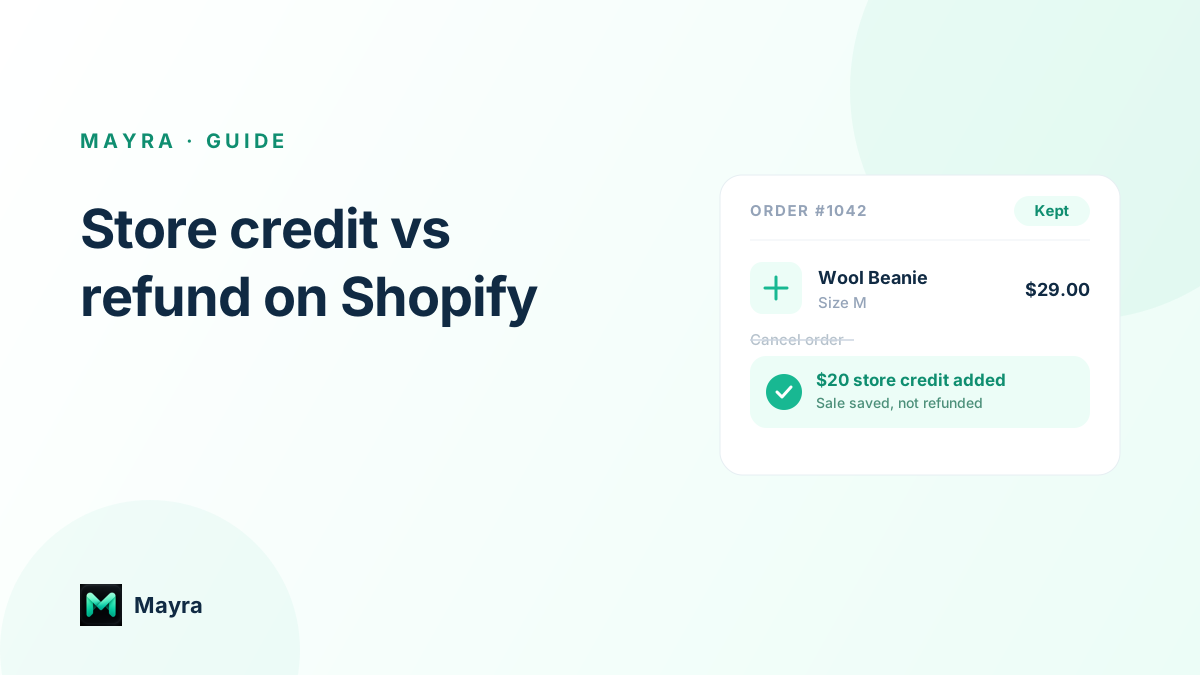
Every Shopify store faces the same quiet decision dozens of times a month: a customer wants their money back, and you choose how to give it. A refund sends the money out of your business for good. Store credit keeps it in. That single difference, repeated across a year of cancellations and returns, adds up to real money and real customer relationships. This guide covers when each makes sense, the math behind them, and how to make store credit the easy and fair choice.
The real difference between a refund and store credit
A refund reverses the sale. The money leaves your account, the customer's relationship with you often ends there, and you're left with the cost of acquiring them in the first place. Store credit does something different: it keeps the revenue in your ecosystem and gives the customer a reason to come back and spend again. One closes the loop; the other keeps it open.
When a refund is the right call
Store credit isn't always the answer, and pretending otherwise damages trust. A cash refund is the right choice when a customer is genuinely unhappy, when a product arrived faulty, or when they're legally entitled to their money back (an EU withdrawal, for example). Forcing credit on someone who wants a refund is a short-term win that costs you a customer and a review. Always keep the refund path open.
When store credit wins
Store credit shines when the customer isn't rejecting you, just this order. They changed their mind, the timing was wrong, or they'd happily buy something else. In those moments, credit (especially with a small bonus) is often more appealing than a refund, because it's worth more and it's instant. You keep the revenue, and the customer keeps a reason to return.
The math: what store credit actually saves
Consider a $200 order a customer wants to cancel. A refund costs you the full $200 of revenue, plus the marketing you spent to win that customer, and it usually ends the relationship. Offer a 10% store-credit bonus instead, and your cost is $20 of future credit, while the $200 stays in your business and the customer is likely to spend again.
These are illustrative numbers, not a promise, but the shape holds: the cost of a store-credit incentive is a fraction of the revenue you lose on a refund. Even if only some customers take the offer, the saved sales add up quickly.
How to make store credit the easy choice
Customers take the path of least resistance, so make store credit the easy, obvious option rather than something buried in a policy page:
- Offer it at the moment of decision, when a customer starts a cancellation or return, not days later.
- Add a small bonus so the credit is worth more than the refund.
- Make the value and expiry clear, so it feels like a perk, not a catch.
- Keep a refund available, so the choice is genuine.
Mayra does exactly this: when a customer tries to cancel, it can present a store-credit save-offer with a bonus you set, keeping the sale instead of refunding it.
Store credit at the moment of cancellation
The highest-value moment to offer store credit is the instant a customer decides to cancel. That's cancellation deflection: intercept the cancellation, present a credit offer, and keep the order. It's the difference between a refund you were about to issue and a sale you saved. We covered the full playbook in how to reduce order cancellations on Shopify.
Keep it fair: budgets, expiry, and transparency
Store credit only works long term if it's fair to both sides. Cap how much credit you issue per month so a good idea doesn't become an open-ended liability. Set a reasonable expiry. And be transparent: show the credit's value clearly and never hide the refund option. Done well, store credit is a win for the customer and for you; done deceptively, it's a fast way to lose both.
Is store credit better than a refund on Shopify?
It depends on the situation. Store credit keeps revenue in your business and gives the customer a reason to return, so it usually comes out ahead when the customer is happy to shop again. A cash refund is the right call when a customer is unhappy or legally entitled to their money back. Offering store credit as the default, with a refund as the fallback, captures most of the upside without hurting trust.
How much of a store-credit bonus should you offer?
A common range is 5% to 15% of the order value. The bonus needs to be worth more to the customer than the hassle of keeping the order, while still costing you far less than losing the full sale. On a $200 order, a 10% bonus is $20 of future credit, versus $200 of lost revenue on a refund.
Keep more of the sales you already won
Refund when it's right, but don't treat a refund as the only way to give money back. Offer store credit at the moment of decision, add a small bonus, keep it fair and transparent, and you'll keep more revenue and more customers without any extra ad spend.
Mayra makes store-credit save-offers, cancellation deflection, and self-serve order editing part of one Shopify app. It's free for early users, and you can compare it to other order editing apps on the alternatives page.