
A customer places an apparel order, then notices the selected hoodie size is wrong. Minutes later, they ask to swap the size, add matching joggers, remove a hat, and change the delivery address. Your support team sees a simple request. Your warehouse sees an order that may already be moving through payment, inventory allocation, picking, and shipping preparation.
That gap is where eligibility rules earn their place. They decide whether a post-purchase request remains a safe order edit or must move into a return, refund, exchange, or support workflow. For a Shopify merchant, this isn't a feature you switch on once. It's a governance layer that defines how much customer freedom your operation can safely provide.
Table of Contents
- Why a Post-Purchase Change Request Needs a Decision in Seconds
- What Eligibility Rules Actually Govern in Post-Purchase
- The Core Rule Types Merchants Configure
- How Strict Rules Reshape Support Load and Return Rates
- Two Store Profiles and the Rules That Fit Each
- How Mayra Apps Enforces Eligibility Rules in Practice
- Designing Your First Eligibility Rule Set
Why a Post-Purchase Change Request Needs a Decision in Seconds
A customer buys a medium hoodie from a direct-to-consumer apparel brand. Eight minutes later, they contact support to request a large instead. They also want to add a matching jogger and remove a hat from the same order.
The support agent now has more than one question to answer. Is the order still unfulfilled? Has payment settled? Has inventory been reserved for the new variant? Has the warehouse printed a pick-and-pack ticket? Can the original order total be adjusted without creating a second checkout?
While the customer is waiting, several systems may be working from the original order state. Inventory may be decrementing for the medium hoodie. A fulfillment queue may be preparing the order. A shipping label may be waiting for the address and package details to be finalized. If the agent approves the request manually without checking those conditions, the customer can receive a confirmation that the operation can't complete.
Operational rule: A post-purchase request should receive a clear decision before a human or automation attempts to change the order.
That decision doesn't need to be complicated from the customer's perspective. The answer can be simple: the change is allowed, the change needs approval, or the change isn't available and must follow a return path. The complexity belongs in the rule evaluation, not in a long exchange with support.
Shopify's order-editing guidance makes the central boundary clear. Merchants can edit unfulfilled items, while fulfilled items or fulfilled quantities can't be handled as ordinary edits. Orders in pending payment status may also block item and discount changes. Once fulfillment has started, a size swap stops being a low-friction adjustment and becomes a returns, refund, or exchange decision (Shopify's order-editing considerations).
A fast eligibility decision protects both sides. The customer gets an immediate explanation instead of an uncertain promise. The warehouse receives one authoritative order state. Support avoids chasing inventory, payment, and fulfillment teams for every request. You can learn more about the operational context in this guide to ecommerce fulfillment automation.
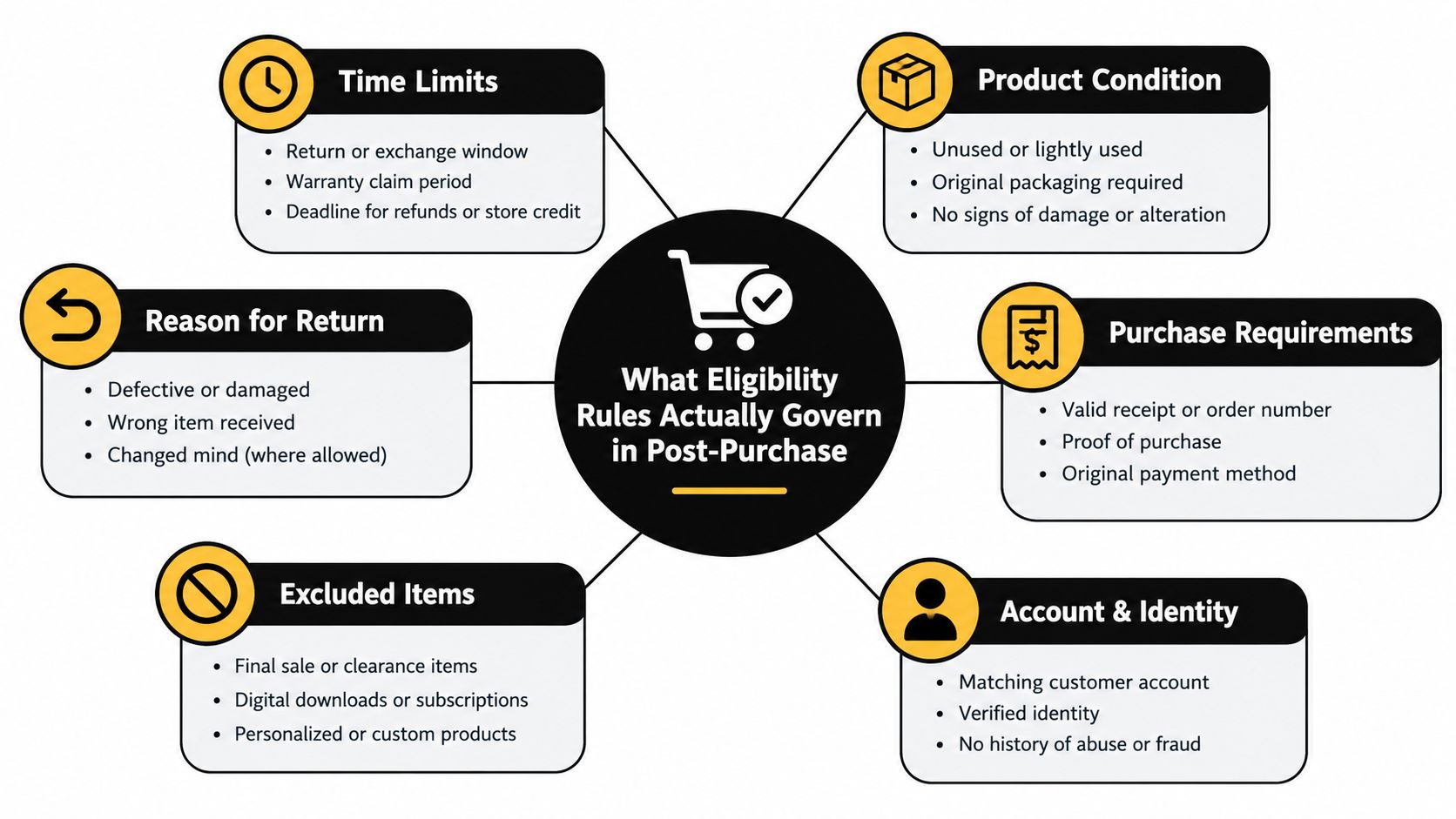
What Eligibility Rules Actually Govern in Post-Purchase
Eligibility rules are conditions that determine whether a proposed change can proceed against the live order. They answer a narrow question: is this request allowed under the merchant's policy and the order's current state?
That makes eligibility different from two related controls:
- Permissions determine who may act. A customer, support agent, fulfillment manager, or app may have different capabilities.
- Approval rules determine which eligible requests need human review before execution.
- Eligibility rules decide whether the request passes the first gate at all.
A useful sequence looks like this:
- The customer proposes a change.
- The system checks eligibility against the order.
- If the request qualifies, permissions determine whether the actor can submit it.
- Approval rules decide whether a person must review it.
- The approved change is written to Shopify or routed through the appropriate return process.
That sequence prevents a common mistake. Giving a customer permission to request a variant swap doesn't mean every order qualifies for one. A fulfilled order, an excluded product, an unsupported destination, or an order above the merchant's value cap can fail eligibility before approval is relevant.
Eligibility applies to the change, not only the order
Merchants often ask whether an order is editable as if the answer were permanent. In practice, the answer can depend on the proposed operation. Adding a low-risk item, changing a variant, removing a line, changing a quantity, and updating a shipping address can each require different checks.
The Shopify order-editing workflow is the right reference point for changes that remain inside the order. When the item has already been fulfilled, the Shopify order-editing workflow no longer covers the entire customer need, and the merchant may need a return or exchange path instead.
The same principle appears in regulated systems. The National Park Service evaluates historic properties through explicit criteria and considers both significance and integrity, rather than treating association with an important person or event as an automatic qualification (National Historic Landmarks eligibility criteria). For commerce, the lesson is practical: broad ideas such as “important customer” or “recent order” aren't sufficient policy. You need conditions that the system can check and explain.
Teams designing these controls can also use policy as code patterns as a useful conceptual reference. The goal isn't to make post-purchase service feel bureaucratic. It's to turn merchant intent into repeatable decisions.
The Core Rule Types Merchants Configure
Every eligibility rule should answer a merchant question. If the rule doesn't protect a clear operational, financial, legal, or customer-service boundary, it may be adding friction without adding control.
| Rule Type | Question It Answers | Example Configuration |
|---|---|---|
| Value caps | How much can one order change by? | Allow additions or adjustments only within a merchant-defined value limit |
| Fulfillment state | Has the warehouse already touched this order? | Permit edits while unfulfilled, then close the edit path after fulfillment begins |
| Product, collection, and tag exclusions | Which items are off-limits? | Exclude final-sale tags, restricted collections, or selected products |
| Destination countries | Can the revised order ship to this destination? | Block destinations where revised fulfillment isn't supported |
| Payment and order status | Is the order financially and operationally changeable? | Exclude canceled orders or orders in a payment state that blocks editing |
Value caps protect financial exposure
A value rule controls the size of the requested change. A merchant might set an absolute limit, a relative limit, or both. The useful question isn't whether the new order is more expensive. It's whether the difference is small enough to settle safely without creating an unexpected exposure.
For example, swapping a size may produce no meaningful value change, while adding several items can create a new charge. A cap can allow the first request while routing the second to approval. It can also prevent a customer from turning a modest order into a materially different transaction through repeated edits.
Fulfillment state protects physical execution
Fulfillment state is often the most important operational rule. An unfulfilled order may still be flexible. A partially fulfilled order needs more careful treatment because some lines can remain editable while others have already left the warehouse. A fully fulfilled order generally belongs in a return or exchange path rather than an edit path.
Shopify's documentation separates unfulfilled edits from fulfilled-item returns, which gives merchants a useful foundation for this rule. Don't reduce the policy to elapsed time alone. A short period after checkout doesn't guarantee that the warehouse hasn't begun work.
Exclusions protect special products
Product, collection, and tag exclusions answer whether certain items should ever enter self-serve editing. Common examples include final-sale products, personalized items, bundles with complicated inventory logic, regulated goods, and enterprise licenses.
These exclusions aren't a sign that the store's policy is inconsistent. They acknowledge that different products have different operational costs and contractual conditions. A blanket edit policy can be simpler to explain, but it can also expose the business to changes its systems or suppliers can't support.
Destination rules protect delivery feasibility
A destination-country rule checks whether the revised order can still be shipped under the merchant's logistics and compliance setup. Changing an address or adding an item can alter shipping requirements, tax treatment, or carrier availability.
The important point is that the rules work in combination. An order can be below the value cap but still fail because it has entered fulfillment. It can be unfulfilled but fail because it contains an excluded product. Real merchant behavior comes from these combinations, not from any single toggle.
How Strict Rules Reshape Support Load and Return Rates
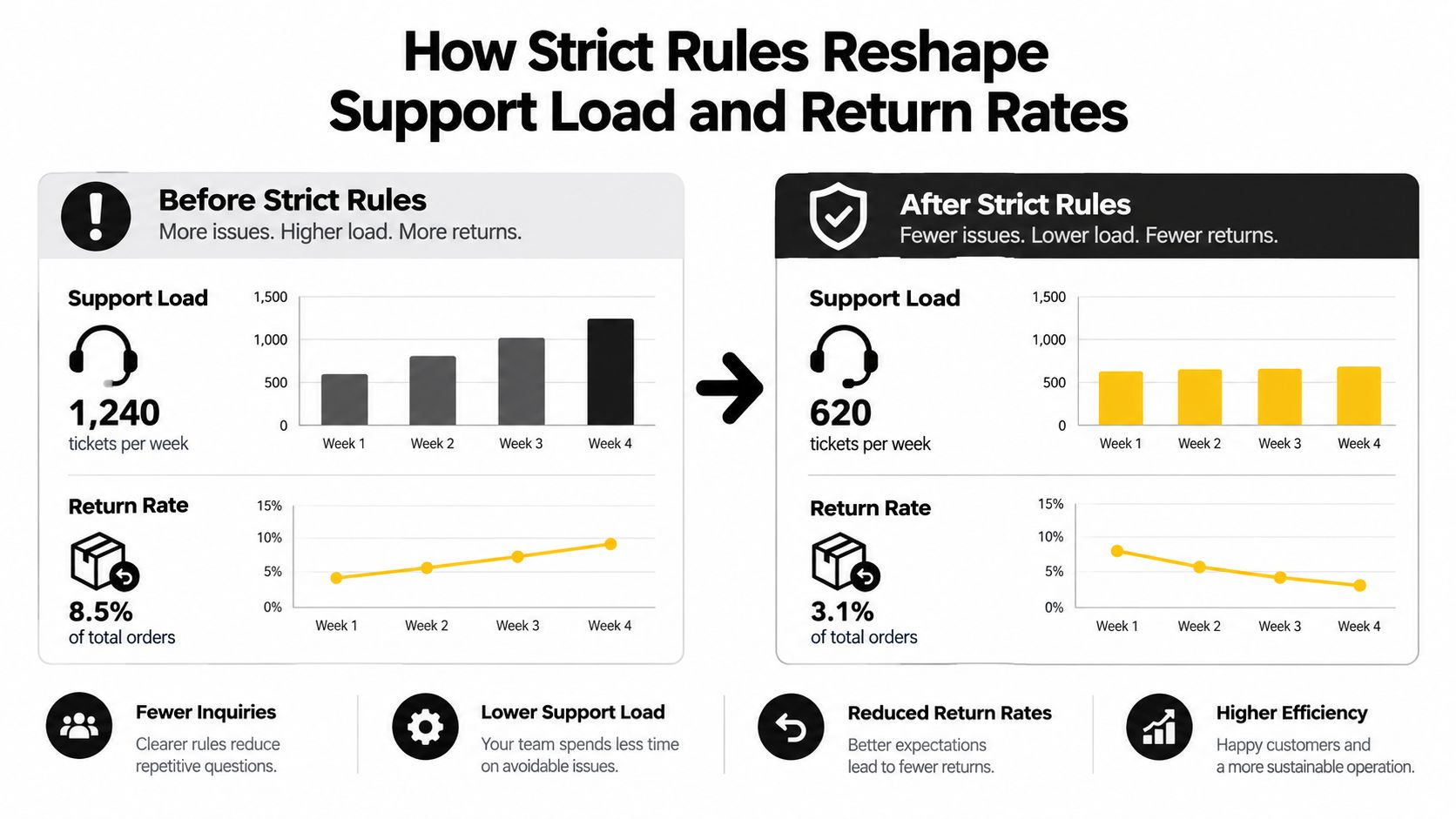
Strict eligibility rules reduce the number of changes that reach the edit workflow. That can keep fulfillment predictable and make support easier to train. It can also send more customers toward returns when the policy blocks a change that could have been handled safely before shipment.
Loose rules create the opposite trade-off. Customers retain more freedom to correct a size, add an item, or update an address, but operations must handle more settlement decisions, inventory checks, exceptions, and edge cases. A rule set that looks generous in the customer account can become expensive if every unusual request requires manual intervention.
Put the cost in the right queue
The best policy doesn't eliminate every request. It sends each request to the least expensive safe channel.
Compare the cost of handling an edited order with the cost of handling a returned order. An edit may require payment settlement and a short fulfillment hold. A return may require shipping, inspection, restocking, refund handling, and customer communication. The exact balance differs by product and operation, so merchants should use their own order and support records rather than relying on an industry benchmark.
Discount status adds another layer. A full-price product may be easy to add or exchange, while a markdown or final-sale item may need an exclusion. The decision should be visible to the customer, because a vague rejection creates more support work than a precise explanation.
Digital products also need a state rule. A download that hasn't been delivered may still be changeable, while an email delivery or license activation can make reversal difficult. The operational trigger isn't always shipment. It can be any event that makes the original transaction difficult to undo.
Decision principle: Tighten a rule when the exceptions cost more than the requests it serves. Loosen it when customers are being pushed into a more expensive return path for changes your operation can safely handle.
Review declined requests by reason. If address changes are routinely rejected before fulfillment, the destination or state rule may be too narrow. If variant edits create inventory conflicts, the fulfillment gate may need to close earlier.
Two Store Profiles and the Rules That Fit Each
A DTC apparel brand and a digital downloads retailer shouldn't inherit the same eligibility policy. Their products, fulfillment events, payment exposure, and customer expectations are different.
The apparel brand may choose a high-friction configuration because physical fulfillment becomes difficult to reverse once the warehouse starts picking. It can use a modest value cap to limit large changes, close edits when the pick-and-pack ticket prints, exclude sale collections and final-sale tags, and block destinations where cross-border revisions create logistical complications.
The digital retailer can use a low-friction configuration because it doesn't need to coordinate a physical warehouse. It may allow changes until the delivery email is queued, avoid a value cap where the underlying license structure supports that choice, exclude enterprise license products, and skip a country gate because delivery occurs electronically.
| Rule Type | Apparel Store, High-Friction | Digital Goods Store, Low-Friction |
|---|---|---|
| Value cap | Keep changes within a controlled order-value boundary | Allow broader changes where license pricing supports them |
| Fulfillment state | Close edits when picking or packing begins | Keep edits open until digital delivery is queued |
| Product exclusions | Exclude final-sale items, personalized products, and selected collections | Exclude enterprise or specially licensed products |
| Tag exclusions | Block final-sale and non-returnable tags | Block tags tied to activated or restricted licenses |
| Destination countries | Use a country blocklist for unsupported cross-border fulfillment | No country gate where delivery is email-based |
| Approval path | Review exceptions that affect inventory or shipping | Review only licensing or high-risk account exceptions |
The apparel policy prioritizes warehouse stability. A customer may find it less flexible, but the rule reflects a physical process where one wrong change can create a replacement shipment or a return.
The digital policy prioritizes convenience because the delivery event is the main boundary. That doesn't mean the retailer has no governance. It means the business places its strictest control around activation, licensing, and account ownership rather than around picking and shipping.
Merchant test: If your rule set would make sense for a different product category without any changes, it probably isn't specific enough for your operation.
How Mayra Apps Enforces Eligibility Rules in Practice
A merchant console turns policy into checks that run against the live order. The proposed change is evaluated against the configured value cap, fulfillment state, product and tag exclusions, and destination-country rules before a payment or refund action runs.
A practical enforcement sequence looks like this:
- The customer submits a proposed change. The request can involve a quantity, variant, address, addition, or removal.
- The system evaluates the order. It checks the order's current state and the requested operation against the merchant's rules.
- The customer receives a decision. A failed check can return a shopper-facing reason written by the merchant, rather than a generic error.
- A qualifying request creates a temporary fulfillment hold. Pickers shouldn't advance an order while its contents or totals are changing.
- Shopify handles settlement. The edit or return is written through Shopify's native workflow, preserving the admin as the system of record.
- The decision remains auditable. Support and operations teams can review which rule allowed or declined the request.
The fulfillment hold matters because eligibility and execution are separate moments. Passing the rule check doesn't mean the warehouse should continue as if nothing changed. The hold gives the revised totals and line items time to settle before fulfillment proceeds.
The same model works for a decline. If an order contains an excluded final-sale item, the system can explain that the item isn't available for post-purchase editing and direct the customer to the applicable support or return path. Clear reasons reduce repeat attempts and help agents understand why they can't override the decision.
For merchants evaluating the operational controls, Mayra's post-purchase controls provide a place to configure edit windows, capabilities, approvals, exclusions, and fulfillment safeguards. The important design choice is not the presence of a toggle. It's whether the resulting decision matches the way your warehouse, payment flow, and customer service team work.
Designing Your First Eligibility Rule Set
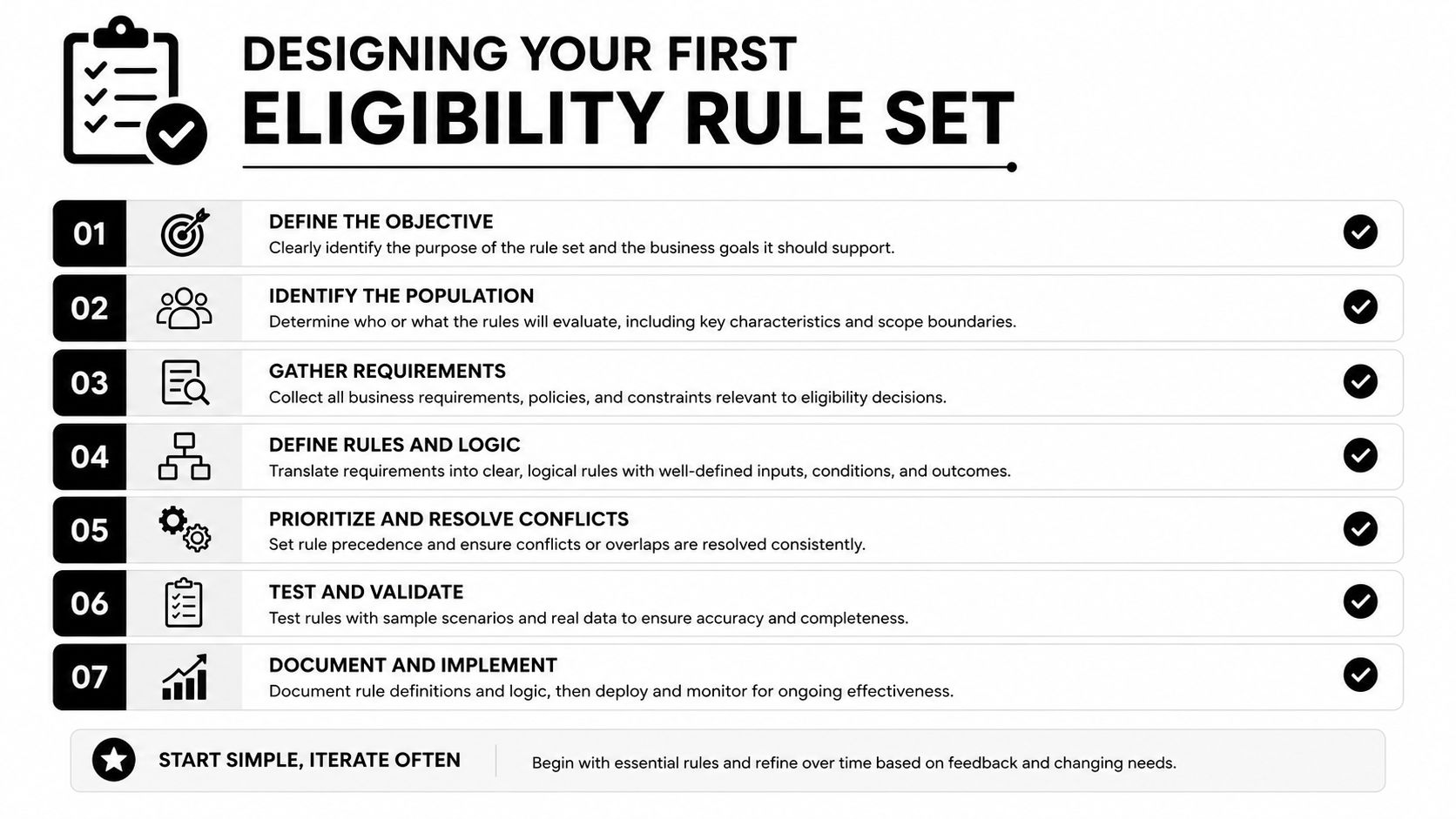
Start with a policy, not a screen full of settings. Your first version should describe the order states you support, the destinations you serve, and the kinds of changes your team can safely fulfill.
Use this sequence:
- Map the order states. Identify when an order is unfulfilled, partially fulfilled, in transit, delivered, canceled, or otherwise unavailable for editing.
- Mark product exceptions. List products, collections, and tags that should go directly to support, returns, or another controlled path.
- Set a sensible value boundary. Base the cap on your own order economics and the financial exposure your team can review.
- Define the open window. Tie the cutoff to a real operational event, such as fulfillment starting, rather than relying only on a generic elapsed-time promise.
- Write the customer message. Explain what failed, why it failed, and what the customer can do next.
Don't try to make the first version perfect. A permissive policy can reveal which requests create inventory, payment, or fulfillment problems. You can then tighten the specific rule responsible instead of blocking every customer.
Treat the policy as a living control
Review declined requests by reason and look for repeated patterns. If customers frequently request address changes before the warehouse begins work, that may justify a broader address capability. If one new collection generates repeated exceptions, its product or tag exclusion may need a more precise customer message.
Shopify's customer-account and return tooling supports a more explicit treatment of return eligibility, including reasons an item isn't returnable (Shopify customer accounts). That kind of reason-based governance is useful beyond returns. It helps support teams distinguish a policy decision from a technical failure.
Your first rule set is version one, not a permanent restriction. Keep the rule log, review the operational consequences, and adjust caps, exclusions, and fulfillment gates as your catalog changes. The strongest policy gives customers as much freedom as your actual operation can honor, then sends every unsafe request to a clear alternative.
Mayra Apps gives Shopify merchants tools for self-serve order edits, controlled additions and removals, fulfillment holds, and merchant-defined eligibility policies tied to the live order. Visit Mayra Apps to configure a post-purchase workflow that keeps safe changes in the edit path and routes the rest to the right support or returns process.